
Monthly Bookkeeping Checklist For Small Businesses

.png)
Monthly Bookkeeping Checklist For Small Businesses
Falling behind on your books is easy. Catching up is expensive. When records slip, you lose sight of your cash position, scramble during tax season, and risk mistakes that a few hours each month could have prevented.
A monthly bookkeeping checklist turns a vague, dreaded task into a clear routine. It helps keep your business finances tidy, your reports accurate, and your records ready for HMRC if they are ever needed.
This guide gives UK small business owners a practical monthly bookkeeping process covering bank reconciliation, payroll, financial reporting, tax preparation, and year-end planning.
Why Monthly Bookkeeping Matters
Monthly bookkeeping gives business owners financial clarity. When your records are current, you can see what money has come in, what has gone out, what you are owed, and what commitments are coming next.
It also makes tax preparation much easier. Recording and categorising transactions throughout the year prevents the last-minute scramble of trying to untangle receipts, invoices, and bank statements before a deadline.
Accurate records also reduce compliance risk. Whether you need to prepare VAT returns, manage payroll, or get ready for Making Tax Digital, regular bookkeeping gives you a stronger foundation.
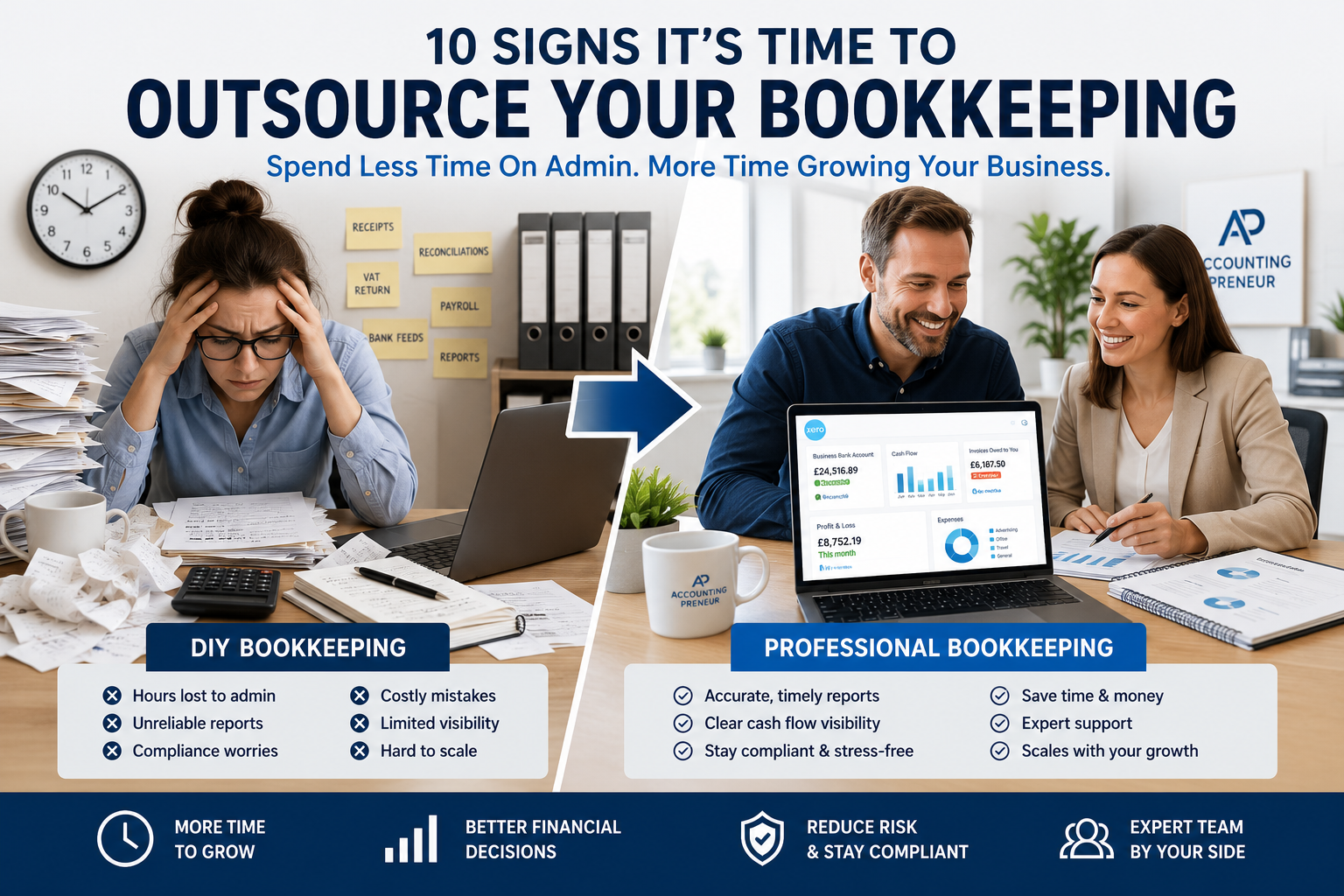
If keeping your records up to date is already taking too much time, professional bookkeeping services can help keep everything organised and compliant.
The Core Monthly Bookkeeping Tasks
Every business is different, but most small businesses should complete the same core tasks each month.
These include reviewing transactions, reconciling bank accounts, checking invoices, managing supplier payments, reviewing payroll records, and producing basic financial reports.
Once you have a system in place, this routine often takes a few hours per month. As your business grows and transaction volumes increase, it may take longer. That is usually the point where outsourcing becomes worth considering.
Review And Categorise Transactions
Start by reviewing all imported transactions from your bank account, credit card, payment processor, and accounting software.
Each transaction should be categorised correctly. For example, software subscriptions, travel, materials, insurance, wages, and professional fees should all be posted to the right place.
Accurate categorisation matters because it affects your profit and loss report, tax calculations, VAT treatment, and management accounts.
It is better to review transactions weekly rather than leaving everything until month-end. The details are fresher, errors are easier to spot, and your records stay cleaner.
Reconcile Bank And Credit Card Accounts
Bank reconciliation is one of the most important monthly bookkeeping tasks. It confirms that the transactions in your records match your bank statements.
Each month, reconcile every business bank account, credit card, and payment account. This helps identify missing transactions, duplicate entries, bank charges, failed payments, and incorrect postings.
You should not rely entirely on bank feeds. They are useful, but they can occasionally duplicate, delay, or miss transactions. A monthly reconciliation ensures your records match reality.
Without reconciliation, your financial reports may look complete while still being inaccurate.
Check Accounts Receivable
Accounts receivable means money owed to your business by customers or clients.
Each month, run an aged debtor report to see which invoices remain unpaid and how long they have been outstanding.
Late payments can quickly affect cash flow, especially for small businesses. Send reminders promptly, follow up overdue invoices, and make sure payments received are matched to the correct customer invoice.
Good bookkeeping makes it easier to see what you are owed and take action before late payment becomes a bigger problem.
Review Accounts Payable
Accounts payable means money your business owes to suppliers, lenders, software providers, landlords, or other creditors.
Each month, review upcoming bills and payment dates. This helps you avoid late fees, protect supplier relationships, and plan cash flow more effectively.
Where possible, schedule payments around your expected income. This gives you more control over working capital and helps prevent unnecessary pressure on your bank balance.
Process Payroll And Update Records
If you employ staff, payroll should be reviewed as part of your monthly bookkeeping routine.
Before each pay run, check employee hours, overtime, deductions, pension contributions, PAYE, National Insurance, and any statutory payments.
After payroll has been processed, make sure payroll journals are posted correctly into your bookkeeping system. Wage costs, PAYE liabilities, pension contributions, and employer National Insurance should all be reflected accurately.
If you need support with payroll processing, RTI submissions, payslips, and PAYE compliance, our payroll services can help keep everything accurate and on time.
Prepare And Review Financial Reports
Bookkeeping is not just about keeping records tidy. The real value comes from reviewing what the numbers are telling you.
Each month, review your profit and loss report, balance sheet, and cash flow position.
Your profit and loss report shows whether the business is profitable. Your balance sheet shows what the business owns and owes. Your cash flow review shows how money is moving in and out of the business.
Looking at these reports regularly helps you spot trends, control costs, manage cash flow, and make better business decisions.
For growing businesses, regular business advice can help turn monthly financial reports into practical actions.
Set Aside Money For Tax
Tax should never be a surprise. Each month, estimate how much tax you may need to pay and set money aside where possible.
This is particularly useful for sole traders, landlords, and small limited companies where tax bills can create cash flow pressure if they are not planned for.
If you are VAT registered, review your VAT position regularly rather than waiting until the return is due. This helps you avoid last-minute shocks and ensures your VAT records remain complete.
Our VAT services can support VAT returns, Making Tax Digital requirements, and HMRC compliance.
Keep Digital Records And Receipts Organised
Each month, check that receipts, invoices, and supporting documents have been uploaded and attached to the correct transactions.
Digital record keeping is increasingly important, especially with Making Tax Digital. Cloud accounting software can help by storing receipts, importing transactions, and keeping records linked to each entry.
HMRC provides guidance on Making Tax Digital here: Making Tax Digital for Income Tax.
Keeping documents organised throughout the year makes tax returns, VAT returns, and year-end accounts much easier to prepare.
Review Your Chart Of Accounts
Your chart of accounts is the structure used to categorise income, expenses, assets, liabilities, and equity.
It does not need to be reviewed every month in detail, but it is worth checking regularly to make sure it still reflects how your business operates.
If you have new recurring costs, new income streams, or unused categories cluttering your reports, your chart of accounts may need updating.
A clean chart of accounts makes financial reports easier to understand and reduces the risk of miscoding transactions.
Check Cash Flow And Key Metrics
Good bookkeeping should help you understand cash flow, not just tax compliance.
Each month, review simple indicators such as your bank balance, overdue invoices, upcoming supplier payments, expected tax liabilities, and cash runway.
Cash runway shows how long your current funds could cover business costs. Days sales outstanding shows how long customers take to pay. These figures help you identify problems before they become urgent.
Quarterly And Year-End Tasks To Remember
Some bookkeeping tasks do not need to be completed every month, but they should still be built into your routine.
Quarterly tasks may include reviewing VAT returns, checking stock, reviewing loan balances, and updating cash flow forecasts.
Year-end tasks may include preparing records for your accountant, checking payroll totals, reviewing fixed assets, and ensuring all income and expenses have been recorded correctly.
If you need support preparing personal or business tax information, our Self Assessment tax return services can help ensure your records are complete and accurate.
Monthly Bookkeeping Checklist
- Review imported bank transactions
- Categorise income and expenses correctly
- Reconcile bank and credit card accounts
- Check unpaid customer invoices
- Review supplier bills and payment dates
- Process payroll and post payroll journals
- Review profit and loss, balance sheet, and cash flow
- Set aside money for tax
- Upload receipts and supporting documents
- Check VAT records if VAT registered
- Review cash flow and key financial indicators
Frequently Asked Questions
What is included in monthly bookkeeping?
Monthly bookkeeping usually includes reviewing transactions, reconciling bank accounts, checking invoices, managing supplier payments, processing payroll records, reviewing financial reports, and preparing information for tax compliance.
What are the basic principles of bookkeeping?
The main principles are to record every transaction accurately, keep business and personal finances separate, categorise consistently, reconcile regularly, and retain supporting documents.
Is AI replacing bookkeepers?
No. AI and automation can help with data entry, bank feeds, and categorisation, but they do not replace professional judgement, compliance knowledge, or the ability to interpret financial information.
How much should I pay a bookkeeper in the UK?
Costs vary depending on experience, location, transaction volume, and business complexity. Some bookkeepers charge hourly, while others offer fixed monthly packages that provide more predictable costs.
Final Thoughts
Monthly bookkeeping does not need to be complicated. The key is consistency.
By reviewing transactions, reconciling bank accounts, checking invoices, managing payroll records, and reviewing reports every month, you keep your business finances clearer and reduce year-end stress.
Start with bank reconciliation this month, then build the rest of the checklist into your routine. If the process becomes too time-consuming, professional bookkeeping support can take the pressure off and give you more time to focus on running your business.
If you would like help improving your monthly bookkeeping process, speak to our accountants in Fitzrovia today.
Get in touch today to see how we can help you!
Contact us






.png)
-min.png)

.png)


