
Making Tax Digital Explained: Small Businesses Guide 2026

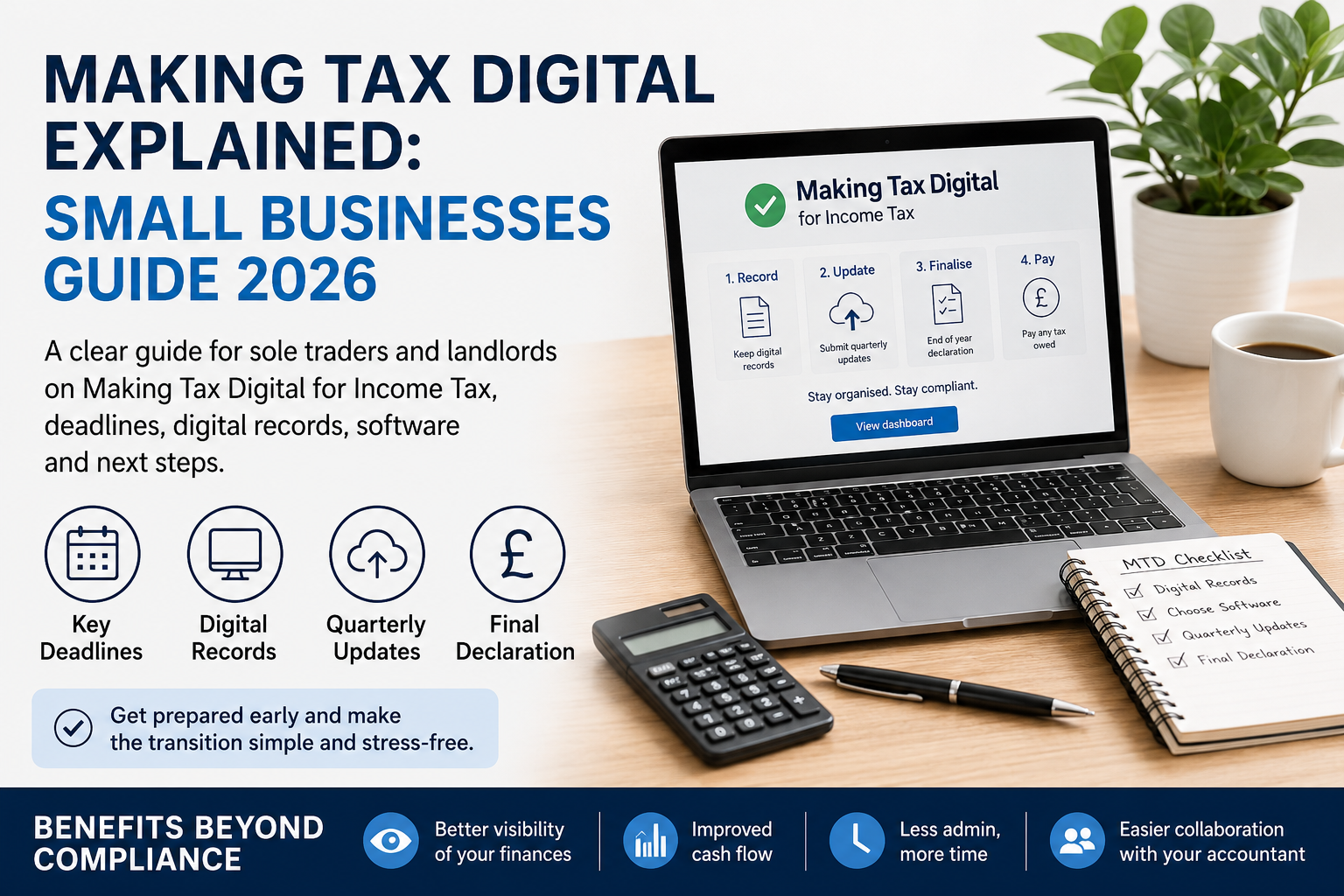
Making Tax Digital Explained: Small Businesses Guide 2026
Making Tax Digital is changing how many UK businesses record income and report to HMRC. From April 2026, thousands of sole traders and landlords will move away from relying on one annual tax return and begin submitting digital updates throughout the year.
For many small businesses, this may feel like another administrative burden. However, with the right bookkeeping routine, compatible software and preparation, Making Tax Digital can become a manageable part of your financial process rather than a last-minute scramble.
This guide explains what Making Tax Digital for Income Tax means, who needs to comply, what records you need to keep, and how to prepare your business before the rules apply.
What Is Making Tax Digital For Income Tax?
Making Tax Digital for Income Tax is a government initiative that requires certain sole traders and landlords to keep digital records and report income and expenses to HMRC using compatible software.
Under the current Self Assessment system, many taxpayers submit one annual return after the tax year ends. Under Making Tax Digital, those within scope will submit quarterly updates during the year, followed by a final declaration after the tax year has ended.
This means bookkeeping becomes more regular. Instead of pulling together records once a year, businesses need to keep income, expenses and digital records up to date throughout the year.
Who Needs To Use Making Tax Digital?
You will need to use Making Tax Digital for Income Tax if you are a sole trader or landlord registered for Self Assessment and your qualifying income exceeds the relevant threshold.
Qualifying income means your gross income from self-employment and property before expenses are deducted. This is important because HMRC looks at income, not profit, when deciding whether the rules apply.
The phased start dates are:
- 6 April 2026: sole traders and landlords with qualifying income over £50,000
- 6 April 2027: sole traders and landlords with qualifying income over £30,000
- 6 April 2028: sole traders and landlords with qualifying income over £20,000
You can check the official HMRC guidance here: Making Tax Digital for Income Tax.
What Changes Under Making Tax Digital?
The biggest change is the move from annual reporting to more regular digital reporting. Businesses within scope will need to keep digital records and submit quarterly updates to HMRC using compatible software.
Quarterly updates are not full tax returns. They summarise business income and expenses for the period. At the end of the year, you then complete a final declaration to confirm your overall tax position.
If you currently leave your bookkeeping until the end of the year, Making Tax Digital will require a change in routine. Monthly bookkeeping, regular bank reconciliation and accurate categorisation of transactions will become much more important.
Digital Record Keeping Requirements
Under Making Tax Digital, paper records alone will not be enough. You will need to keep digital records of your business income and expenses using compatible software or spreadsheets connected to bridging software.
Your digital records should include key transaction details such as the date, amount and category of each item of income or expense.
Good digital bookkeeping usually includes:
- Recording income and expenses regularly
- Using bank feeds to reduce manual entry
- Capturing receipts digitally
- Reconciling bank accounts monthly
- Keeping records organised by tax year
If keeping digital records feels overwhelming, professional bookkeeping services can help you set up a reliable process and keep your records up to date.
Quarterly Updates Explained
Quarterly updates give HMRC a summary of your income and expenses during the tax year. Each update is submitted through compatible software and builds a running picture of your business activity.
The figures submitted in quarterly updates are not final. Adjustments, reliefs and corrections are made later through the final declaration.
The main purpose is to keep your records current and give HMRC more regular information. For business owners, this also creates a useful opportunity to monitor income, expenses and cash flow more frequently.
The Final Declaration
After the end of the tax year, you submit a final declaration. This confirms your total taxable income, includes any other income sources, and calculates your final tax liability.
This final step replaces the traditional Self Assessment tax return for income covered by Making Tax Digital.
If you also have dividends, savings income, capital gains or employment income, these still need to be reported as part of the final declaration.
If you need help preparing your annual tax position, our Self Assessment tax return services can support you with accurate reporting and tax compliance.
Choosing Making Tax Digital Compatible Software
You must use software that is compatible with Making Tax Digital for Income Tax. This software needs to keep digital records and submit updates to HMRC.
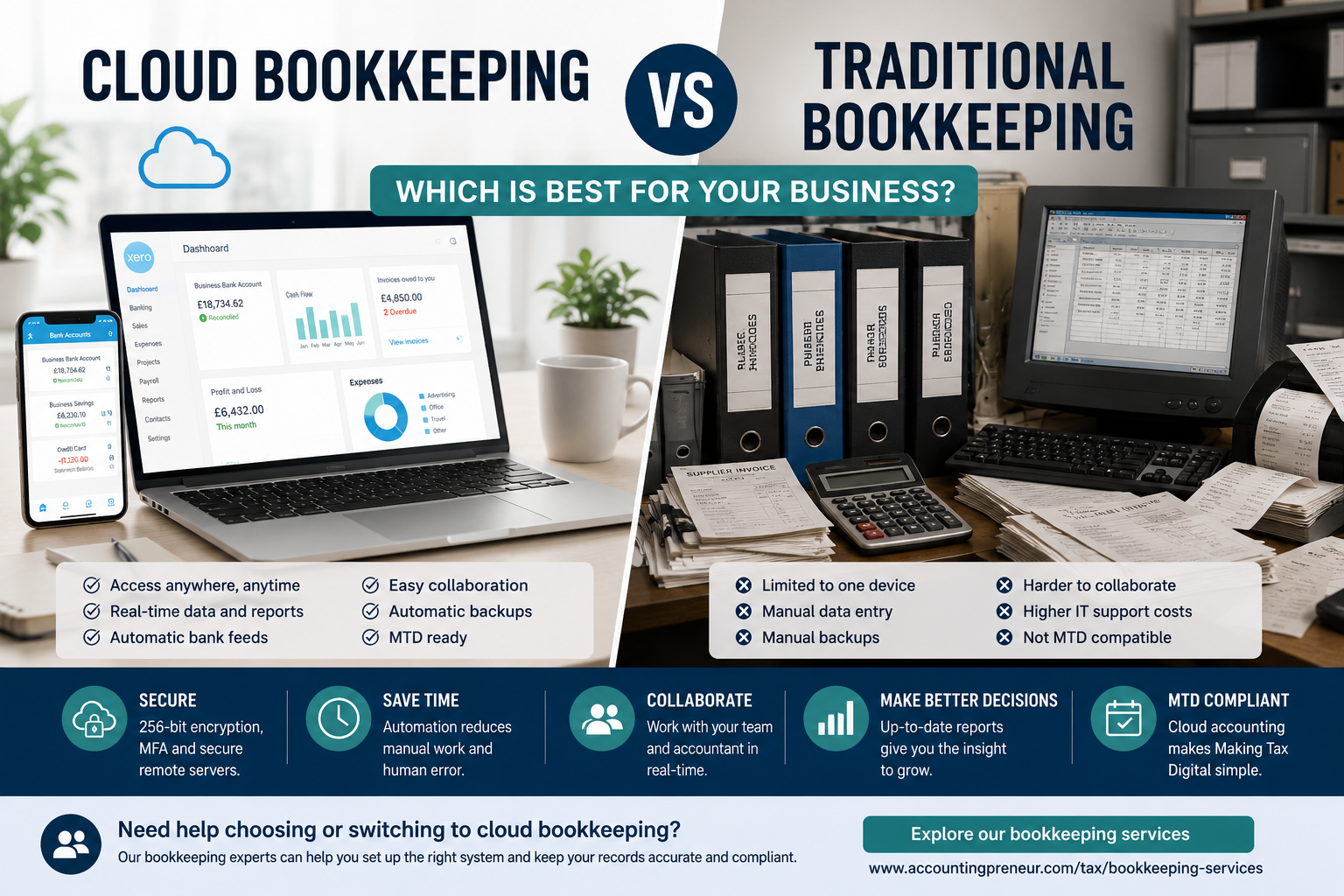
Popular cloud accounting tools include Xero, QuickBooks and FreeAgent. These systems can help automate bank feeds, categorise transactions, capture receipts and generate reports.
When choosing software, consider:
- Whether it is recognised by HMRC for Making Tax Digital
- How easy it is to use
- Whether it connects to your business bank account
- Whether it supports your income sources
- How much support is available
- Whether your accountant or bookkeeper can access it
You can check HMRC’s official software list here: software compatible with Making Tax Digital for Income Tax.
Can You Still Use Spreadsheets?
Yes, spreadsheets can still be used, but they must connect to HMRC through bridging software. This means data must move digitally from your spreadsheet to HMRC without manual retyping or copying and pasting.
For very simple businesses, this may be enough. However, many small businesses find cloud accounting software easier because it reduces manual work and provides better reporting.
If you already use spreadsheets, start reviewing whether they are suitable for Making Tax Digital well before your start date.
Benefits Of Making Tax Digital For Small Businesses
Although Making Tax Digital is a compliance requirement, it can also create practical benefits for small businesses.
Keeping records digitally and updating them regularly can help you:
- Understand your tax position earlier
- Improve cash flow visibility
- Reduce year-end stress
- Make VAT returns easier to prepare
- Improve collaboration with your accountant or bookkeeper
- Reduce errors caused by manual record keeping
For VAT-registered businesses, accurate digital records can also support smoother VAT reporting. Our VAT services can help with VAT returns, Making Tax Digital compliance and HMRC reporting.
Making Tax Digital And Payroll
Making Tax Digital for Income Tax does not replace payroll reporting. If you employ staff, PAYE and Real Time Information submissions still need to be handled separately.
However, payroll costs should still be recorded accurately within your bookkeeping system so your accounts reflect the true cost of employing staff.
If you need help keeping payroll accurate and aligned with your wider financial records, our payroll services can support PAYE, payslips, deductions and HMRC submissions.
Penalties And Compliance
Making Tax Digital uses a points-based penalty system for late submissions. Missing a required update can result in penalty points, and repeated failures can lead to financial penalties.
Late payment penalties can also apply if tax is not paid on time.
The best way to avoid problems is to keep records current, reconcile accounts regularly, and review your figures before submissions are made.
Exemptions And Digital Exclusion
Some people may be exempt from Making Tax Digital if it is not reasonable or practical for them to use digital tools.
This may apply because of age, disability, location, lack of internet access or religious reasons. Exemptions are considered by HMRC on a case-by-case basis.
If you believe you may be digitally excluded, you should contact HMRC and seek advice before your mandatory start date.
How To Prepare For Making Tax Digital
The best time to prepare is before the rules apply to you. Leaving software setup and record migration until the last minute can create unnecessary stress.
A practical preparation plan might include:
- Checking your qualifying income
- Confirming your Making Tax Digital start date
- Choosing compatible software
- Setting up bank feeds
- Digitising receipts and invoices
- Reconciling your records monthly
- Agreeing responsibilities with your accountant or bookkeeper
If you are unsure where to start, speaking with experienced accountants in Fitzrovia can help you understand your obligations and prepare properly.
Can Your Accountant Handle Making Tax Digital For You?
Yes. An accountant or agent can help you sign up, manage digital records, submit quarterly updates and prepare the final declaration.
However, it is important to agree responsibilities clearly. You should know who records transactions, who checks the software, who submits updates and who reviews the final tax position.
Making Tax Digital works best when business owners, bookkeepers and accountants all understand their roles.
Frequently Asked Questions
What are the Making Tax Digital rules for April 2026?
From 6 April 2026, sole traders and landlords with qualifying income over £50,000 must keep digital records and submit quarterly updates using compatible software.
Can I use spreadsheets for Making Tax Digital?
Yes, but you will need bridging software that maintains a digital link to HMRC. Many businesses find full cloud accounting software easier to manage.
Can I start using Making Tax Digital before it becomes mandatory?
Yes. Many businesses choose to adopt compatible software early so they have time to get used to digital record keeping before quarterly reporting becomes compulsory.
Does Making Tax Digital apply to limited companies?
Making Tax Digital for Income Tax applies to sole traders and landlords who meet the income thresholds. Making Tax Digital for Corporation Tax has not yet been introduced.
Final Thoughts
Making Tax Digital is more than a compliance requirement. For many small businesses, it is an opportunity to modernise bookkeeping, reduce manual admin and gain better insight into financial performance.
By preparing early, choosing the right software and keeping accurate digital records, you can make the transition smoothly and avoid unnecessary stress.
If you want support getting ready for Making Tax Digital, speak to our team today. We can help you review your current records, choose the right software and build a bookkeeping routine that keeps your business compliant and organised.
Get in touch today to see how we can help you!
Contact us




.png)
-min.png)

.png)


