
Payroll Mistakes That Trigger HMRC Penalties and How To Avoid Them

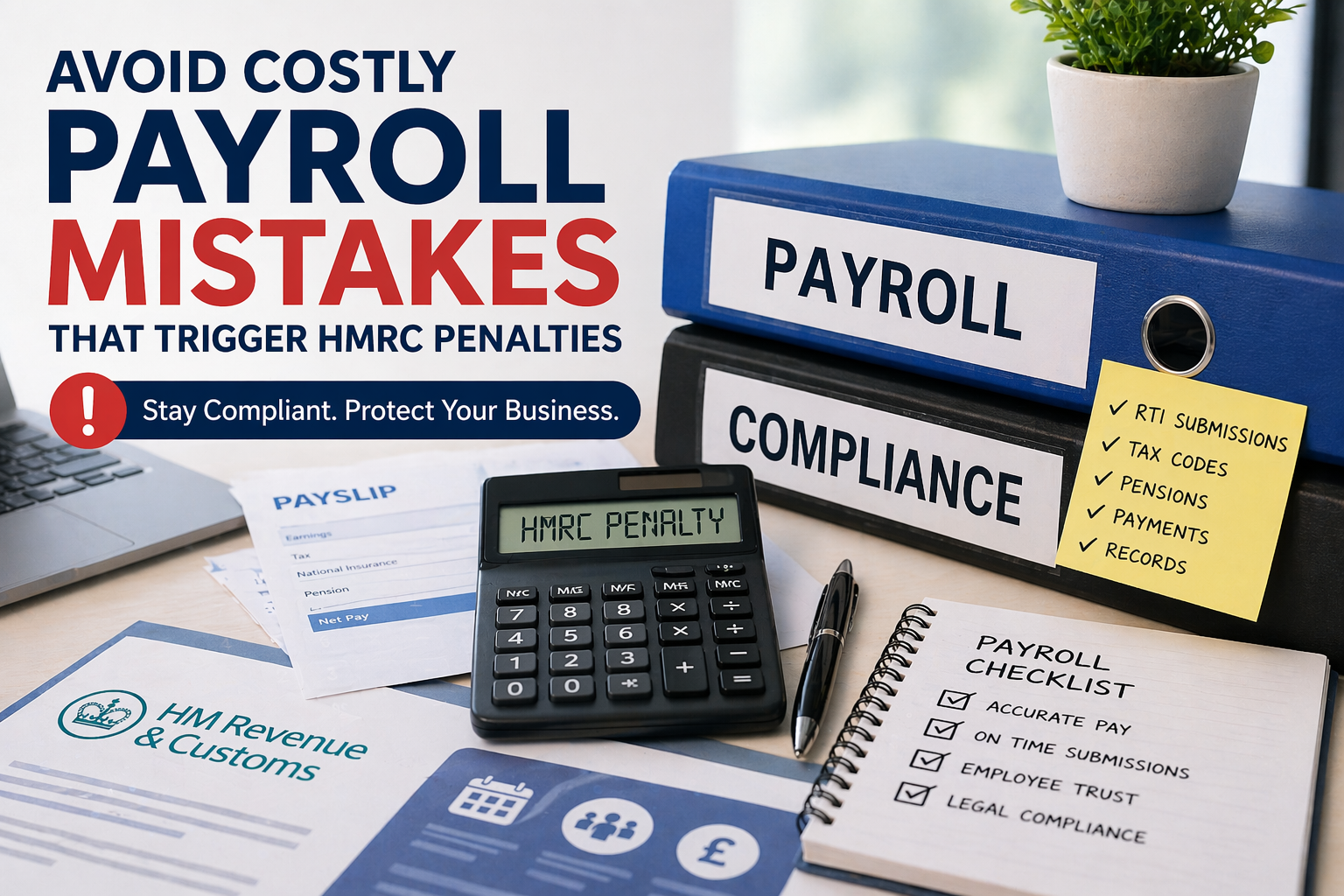
Payroll Mistakes That Trigger HMRC Penalties and How To Avoid Them
Running a business requires juggling many responsibilities, but paying your staff accurately and on time remains paramount. A shocking 90% of organisations admitted they made at least one payroll mistake last year. While some errors are minor, others can attract the immediate attention of HM Revenue & Customs (HMRC), leading to severe financial penalties and massive administrative headaches.
This guide is designed specifically for UK business owners and payroll managers. We will explore how common payroll mistakes lead to automatic HMRC fines and outline the strict controls you need to implement. From resolving an incorrect tax code application to managing complex auto-enrolment pensions, we will provide you with the exact strategies needed to protect your business and maintain employee trust.
Overview of Payroll Processing Risks
Payroll processing demands meticulous attention to detail. HMRC requires businesses to operate a Pay As You Earn (PAYE) system to collect income tax and National Insurance contributions directly from employees' wages. When this system breaks down, the consequences extend far beyond a frustrated workforce.
Typical consequences of payroll errors include employee dissatisfaction, loss of trust, and significant compliance issues. If your staff are not paid correctly, morale plummets. However, the most immediate threat comes from HMRC. The tax authority focuses heavily on late submissions, inaccurate deductions, and failure to meet statutory obligations. When you miss HMRC deadlines, the system often triggers automatic penalties, meaning you could be fined before you even realise you have made a mistake.
Many businesses choose to work with experienced accountants in London to reduce the risk of payroll and compliance problems before they become expensive.
Common Payroll Mistakes That Trigger Penalties
Understanding the most common payroll pitfalls is your first line of defence. We have prioritised the following sections by frequency and penalty risk to help your payroll team tackle the biggest threats first.
Incorrect Tax Code Application
Using the wrong tax codes is one of the most frequent mistakes employers make. Incorrect tax code application happens when a business fails to update employee records after receiving a new coding notice (P9T) from HMRC, or when a new starter's P45 details are entered incorrectly.
When you apply the wrong tax code, you either under-deduct or over-deduct income tax. This leads to frustrated employees facing sudden tax bills or awaiting rebates. Furthermore, employers can incur financial penalties for consistently using incorrect tax codes.
To prevent this, you must update tax codes immediately upon instruction from HMRC. Advise your payroll staff to verify tax codes diligently during the onboarding process and perform regular audits against HMRC's online PAYE accounts.
Late Filing, Late Payment, and Automatic Penalties
Missing deadlines is arguably the fastest way to incur HMRC fines. Under the Real Time Information (RTI) system, you must send a Full Payment Submission (FPS) on or before your employees' payday.
HMRC imposes automatic penalties for late filing of PAYE information. While HMRC occasionally allows a three-day grace period for late filing, relying on this is incredibly risky. If you miss the deadline, the minimum penalty for late PAYE submissions is £100 per month, which is charged quarterly.
Similarly, late payment of PAYE tax and National Insurance triggers fines. Late payment penalties range from 1% to 4% of the late payment amount, depending on how many defaults occur in a tax year. To avoid these costly mistakes, we recommend setting internal deadlines a few days before the statutory HMRC deadlines to allow a buffer for unexpected delays.
Payroll Software Misconfiguration and System Errors
Modern payroll software is brilliant for automating calculations, but it is only as good as the data and rules configured within it. Many costly payroll mistakes stem from software misconfiguration.
Before running payroll, advise your team to conduct a thorough audit of your payroll software settings. You must instruct staff to test new pay elements or deduction calculations in a sandbox environment before setting them live. Furthermore, keeping your software updated with the latest payroll regulations and HMRC changes is a strict legal requirement. Failure to apply legislative updates will automatically corrupt your payroll calculations.
Pension Contributions and Auto-Enrolment Errors
Workplace pensions carry their own set of stringent rules governed by the Pensions Regulator. Auto-enrolment errors are incredibly common and heavily penalised.
You must consistently check your workforce to determine employee eligibility based on age and earnings. Instruct your team to verify that both employer and employee pension contributions match the exact percentages defined by your pension scheme. Whenever an employee opts out or changes their contribution level, document these pension contribution changes meticulously. The Pensions Regulator does not hesitate to issue hefty fines for non-compliance.
Holiday Pay and Overtime Miscalculations
Miscalculating overtime and holiday pay is a rampant issue across UK businesses. Holiday pay calculations have become increasingly complex, especially for workers with irregular hours.
You must define exactly what constitutes "normal remuneration" when calculating holiday pay, which often includes regular overtime and commission. Instruct your payroll team to apply the correct overtime rates precisely as stated in each employee's contract. Whenever a worker's pay structure or holiday entitlement changes, advise your staff to update the underlying calculation formulas immediately to avoid underpayments.
Statutory Payments and Benefits Processing Errors
Employers must process statutory payments accurately to avoid fines and employee dissatisfaction. The most common statutory payments you will encounter include Statutory Sick Pay (SSP), Statutory Maternity Pay (SMP), and Statutory Paternity Pay (SPP).
Each of these payments has specific qualifying criteria and duration limits. Furthermore, processing benefits-in-kind—such as company cars or private health insurance—requires careful reporting, usually via P11D forms. We recommend mapping these statutory rules directly into your payroll software flows to prevent human error and ensure compliance.
Incorrect Employee Data and Poor Payroll Records
Incorrect employee data can cause significant compliance issues. A simple typo in a National Insurance number or a misspelt surname can prevent a Full Payment Submission from processing correctly. You must validate all personal details and National Insurance numbers upon hiring.
Furthermore, failure to keep accurate payroll records can lead to penalties during HMRC audits or inspections. You are legally required to retain detailed digital records of PAYE for at least three tax years. Recommend implementing secure, cloud-based backups and strict access controls to prevent data breaches while satisfying HMRC's retention rules.
Accurate payroll records are much easier to maintain when your wider finances are organised too. Our bookkeeping services help businesses keep their records clear, up to date, and ready for review.
Misclassification and Contractual Payroll Errors
Misclassifying employees as independent contractors can result in devastating penalties, backdated tax payments, and legal disputes. Employers must understand the precise difference between employees and contractors for tax purposes.
Advise your HR and payroll teams to review worker status regularly against HMRC's employment status tests (such as the CEST tool). Instruct them to ensure that the payroll treatment aligns perfectly with the actual working practices and contract terms.
How To Avoid Payroll Errors in Practice
Knowing the common payroll errors is only half the battle. You must actively implement systems to catch errors before they escalate into financial penalties.
Use and Configure Payroll Software Correctly
Investing in modern payroll software can help automate complex calculations and ensure compliance. Choose payroll software that features direct RTI reporting and seamless pension provider integration.
Configure your software tax tables and pay templates accurately from day one. When legislative changes occur—such as updates to the National Minimum Wage—run parallel tests to ensure the new rules calculate correct figures. Taking reasonable care when setting up your system drastically reduces the risk of long-term compliance issues.
Strengthen Controls Over Late Filing Risk
To protect your business from late filing penalties, prioritise automated checks within your payroll processing cycle. Set calendar reminders for each tax month and major tax year deadlines.
Many employers fail to submit a Full Payment Submission simply because the primary payroll administrator is off sick. To mitigate this risk, allocate a fully trained backup approver for all critical payroll submissions. If no employees are paid in a given tax month, remember to submit an Employer Payment Summary (EPS) to inform HMRC.
Maintain Accurate Payroll Records Continuously
Accurate payroll record-keeping is essential for resolving disputes and proving your compliance during an inspection. Proper records keep your business safe.
Enforce an employee self-service system where staff can update their own personal data, such as changing a home address or updating bank details. Perform monthly reconciliations of your PAYE and National Insurance NICs against your finance software. Regular audits of payroll records can help identify and correct errors well before the end of the tax year.
Pension And Statutory Payments Compliance Checks
Run periodic auto-enrolment eligibility audits. Every pay period, reconcile the pension contributions deducted from your employees' wages with the amounts paid over to the pension provider. This ensures you never fall behind on your legal obligations to the Pensions Regulator.
Correcting Errors And Dealing With HMRC
Mistakes happen, even with the best payroll management practices in place. How you respond to these errors dictates whether you face unnecessary penalties or simple corrections.
If you discover a mistake, voluntary disclosure is always the best approach. Disclose mistakes quickly to HMRC when required. If you submitted inaccurate year to date figures, you must submit an amended Full Payment Submission or an additional FPS to correct the figures as soon as possible.
Always document all corrections, maintain clear digital records of your actions, and communicate openly with affected employees to maintain employee trust.
Year-End Tasks And Tax Years Considerations
The end of the tax year is a high-risk period for payroll processing. Rushing through year-end tasks leads to costly payroll mistakes. To ensure a smooth transition into the new tax year, follow these essential steps:
- Reconcile Totals: Reconcile all year-to-date totals for income tax, National Insurance, and statutory payments before making your final year-end submissions.
- File Final Returns: Prepare and file your final FPS (or EPS) for the tax year on or before 5 April. Ensure you mark it as your final submission for the year.
- Issue P60s: Provide all active employees with their P60 forms by 31 May.
- Report Benefits: Complete and submit all P11D and P11D(b) forms for expenses and benefits by 6 July.
- Archive Records: Archive your payroll records according to statutory retention rules, ensuring you have clear, accessible data for the past three tax years.
Appendix: Recommended Tools, Templates, And Checklists
To help your payroll team maintain high standards (perhaps as an initiative during National Payroll Week), we recommend using standardised processes.
Payroll Processing Checklist Template
- Verify all new starter details and National Insurance numbers.
- Update tax codes according to recent HMRC notices.
- Calculate hours, including approved holiday pay and overtime.
- Run software calculations and review variance reports.
- Process the BACS payment file.
- Submit the Full Payment Submission (FPS) to HMRC.
- Distribute secure digital payslips to staff.
Tax Code Verification Checklist
- Check HMRC dashboard for new P9T notices.
- Apply P45 data accurately for new hires.
- Use the starter checklist if a P45 is unavailable.
- Ensure emergency tax codes are updated once proper codes arrive.
Recommended Payroll Software Features to Compare
When evaluating your payroll system, ensure it includes:
- Automated RTI submissions (FPS and EPS).
- Direct integration with major UK pension providers.
- Automated statutory payment calculators (SSP, SMP).
- Employee self-service portals.
- Customisable reporting and general ledger integration.
Get Expert Payroll Support Today
Navigating the complexities of UK payroll regulations, avoiding late payment penalties, and keeping HMRC satisfied requires dedicated time and expertise. You do not have to manage this burden alone.
If you want to eliminate the risk of financial penalties, ensure your staff are paid correctly every time, and free up your time to focus on growing your business, we can help. Our team of experts provides flawless, compliant payroll management tailored to your specific needs.
Ready to safeguard your business from costly payroll mistakes? Visit our payroll services page today to discover how we can streamline your payroll processing and guarantee total HMRC compliance.
If you are looking for broader support with tax, bookkeeping, and compliance, you can also explore our accountants in Fitzrovia page or our accountants London page.
Get in touch today to see how we can help you!
Contact us





.png)
-min.png)

.png)


